
NAEPC Webinars (See All):
Issue 49 – October, 2026
Why Smart Clients Procrastinate on Estate Planning and Trust Funding
Understanding the Human Side of Planning Delays and How Professionals Can Support Client Readiness
Rick Solomon
Synopsis
Estate planning professionals regularly encounter intelligent, well-informed clients who understand what they need to do but still delay important decisions, conversations, and implementation. This article explores why procrastination is often not an information problem, but a readiness problem, and examines the human factors that can stand between understanding and action. It identifies five human capacities that support client readiness and offers practical ways professionals can build support for readiness into the planning process, helping clients face difficult decisions and move from understanding to action.
Introduction
Estate planning professionals encounter the same frustrating reality every day: intelligent, well-informed clients know what they need to do, understand why it matters, and still do not do it.
That tells us something important. Most procrastination is not an information problem. It is a readiness problem. Clients delay because estate planning asks them to confront decisions, conversations, and realities they may not yet be ready to face. Aging. Incapacity. Mortality. Family relationships. Difficult choices with significant consequences.
And if lack of readiness is what is really driving the delay, more information, more explanation, and more reminders are not likely to solve the problem. The profession has become particularly good at informing clients and increasingly good at understanding them. But understanding does not guarantee readiness, and readiness is often what determines whether someone acts.
Where Procrastination Shows Up
Procrastination can appear at every stage of the estate planning process. Estate planners routinely encounter clients who:
- delay beginning the planning process.
- postpone important decisions.
- avoid family conversations.
- fail to complete implementation.
- delay or never fund trusts.
Trust funding is a particularly revealing example. A client may understand the importance of planning, engage professional advisors, make difficult decisions, sign the documents, and still fail to take the final steps necessary to fully implement the plan. The question, then, is why?
Why Smart People Procrastinate
Knowing what we should do and actually doing it are two very different things. We see this everywhere in life. People continue behaviors they know are unhealthy, postpone decisions they know are important, and avoid conversations they know they need to have. More information does not necessarily change behavior because information is only one part of what drives human decisions.
Research in psychology and neuroscience has established that emotion plays a powerful role in judgment, decision making, and behavior. Rather than operating separately from rational thought, emotion and cognition are deeply interconnected. How we feel about a decision can influence what we perceive, how we evaluate our choices, and whether we act at all. 1, 2
Estate planning brings this dynamic into sharp focus. Many of the decisions clients are being asked to make touch on some of the most personal and consequential aspects of their lives. These are not emotionally neutral decisions.
So, when a client delays, the problem may not be that the client needs more information. The client may already understand exactly what needs to be done. What stands between understanding and action may be uncertainty, fear, discomfort, or the natural tendency to avoid something difficult today when its consequences are often far in the future.
What Procrastination May Really Be Telling Us
If we view procrastination only as a behavior that needs to be corrected, the natural response is to provide more information, explain the consequences, send another reminder, or encourage the client to act.
But delay may also be telling us something. How a client delays can offer clues to what may be getting in the way. Repeatedly postponing a decision, avoiding a family conversation, or failing to follow through even when the importance of planning is understood, may each point to something the client has not yet fully come to terms with.
Seen this way, procrastination is not simply an obstacle to overcome. It can become an opportunity to better understand the client and what may be making it difficult to move forward. The estate planning profession increasingly recognizes the importance of emotional intelligence on the advisor side of the relationship. By bringing that same understanding to the client’s experience, professionals may be better able to support them in moving toward action. So, the real question is: How can the planning process help clients become more ready to act?
Five Human Capacities That Support Client Readiness
Readiness is not a single quality. It is supported by several human capacities that become especially important when people are facing consequential decisions, uncertainty, and change. Among those particularly relevant to estate planning are:
- The ability to move beyond unhelpful assumptions, fears, and emotional resistance.
- The ability to trust one’s own judgment and move forward without requiring perfect certainty.
- The ability to accept the realities of aging, incapacity, and change.
- The ability to clarify what matters most and connect decisions to a larger sense of purpose and legacy.
- The ability to engage in meaningful conversations with family members and other important people.
These capacities do not eliminate the difficulty of estate planning decisions. But when they are present, clients may be more ready to face those decisions and move forward. The professional’s role is not to develop these capacities for clients, but to create a planning process that helps support them.
What Professionals Can Do
Professionals do not need to become therapists or counselors to support client readiness. Often, relatively small changes in how conversations are framed and how the planning process unfolds can make difficult decisions easier to approach. The following are several practical ways to put this into practice.
Normalize the Emotional Side of Planning
Clients may assume they should be able to make estate planning decisions logically and efficiently. When they hesitate, they may become frustrated with themselves or feel they should be able to make these decisions more easily.
Professionals can help by acknowledging that many estate planning decisions are inherently emotional. Rather than asking only, “What would you like to do?” consider asking, “What concerns you most about this decision?” or “What part of this feels most difficult?”
Sometimes helping clients recognize what is behind their hesitation can make it easier for them to move through it and make the decision.
Begin With Purpose, Not Process
Estate planning conversations often move quickly into technical decisions. Before asking clients what they want to do, it may be more helpful to explore what they want their planning to accomplish.
Questions such as “What do you most want this plan to accomplish for you and your family?” or “When your family eventually needs to rely on this plan, what would you most like it to provide for them?” can help clients connect technical decisions to the people, values, and outcomes that matter most.
When the purpose behind the planning becomes clear, the decisions themselves often become clearer.
Make Life Transitions Easier to Talk About
Many of the changes that estate planning asks clients to prepare for are natural parts of life, yet discomfort talking about them can contribute to planning delays. Professionals can help make these conversations more natural by framing planning as preparation for life’s transitions rather than simply protection against future crises.
Questions such as, “As you look ahead to the next stage of life, what changes do you think are important to begin preparing for?” or “Are there responsibilities you handle today that you can imagine eventually wanting someone else to take on?” can help clients begin considering these changes before circumstances require them to.
When difficult subjects become easier to discuss, difficult decisions may become easier to make.
Recognize That Readiness Develops Over Time
Readiness generally develops over time, not in a single meeting. Clients may need time to come to terms with difficult decisions or realities they have been avoiding. Giving them space to do that can help them become more comfortable with what they are facing and better prepared to act.
Professionals can normalize this without encouraging unnecessary delay. A simple comment such as, “We will work through this together. You do not have to have every answer today, but we do want to keep moving toward the decisions that are important,” acknowledges the process while maintaining momentum.
Thoughtful follow-up, educational content, and opportunities for continued conversation can support that process. When professionals recognize that readiness needs to be supported throughout the planning process, procrastination becomes less a problem to push through and more a signal that the process itself may need to provide greater support. Building that support into the process creates more opportunities for clients to move from understanding to action.
Listening Beyond the Words
The questions we have suggested throughout this article can bring clients closer to decisions and realities they may not yet have fully come to terms with. Their answers may involve much more than information. A hesitation, a pause, a change in tone, or a moment of emotion may tell us that something important is happening beneath the words.
Estate planning professionals are skilled at listening for the information they need and providing answers when clients need. But these moments call for something different. They call for presence.
Being present means giving clients space to sit with what is coming up for them without immediately moving the conversation forward. It means keeping our attention with the client rather than thinking ahead to the next question or formulating a response. As professionals, we are accustomed to feeling that we need to do something with what a client tells us. In these moments, we often do not.
A moment of silence, natural eye contact, or a simple acknowledgment such as, “I understand. This is not always easy to think about,” may be enough. Sometimes the most supportive thing we can do is simply let clients know they have been heard.
Something important can happen when we listen in this way. Trust deepens. Clients experience not only our professional competence but our genuine care and understanding. That stronger relationship can help them feel more comfortable facing difficult issues and moving toward decisions they may have been avoiding.
None of this requires another technique to master or another problem to solve. It asks us to do something both simpler and, at times, more difficult: give the client space, remain present, and truly listen. Sometimes, being truly heard is exactly what a client needs to become ready to move forward.
References
- Jennifer S. Lerner et al., Emotion and Decision Making, 66 Ann. Rev. Psychol. 799 (2015).
- Elizabeth A. Phelps et al., Emotion and Decision Making: Multiple Modulatory Neural Circuits, 37 Ann. Rev. Neurosci. 263 (2014).
Complimentary Resource
For readers who would like to explore these ideas further, Rick has created The Client Readiness Conversation Guide: 12 Questions to Help Clients Move from Understanding to Action, with guidance on how to use the questions and what to listen for beyond the initial answers. Download a complimentary copy at pros.mywiseyears.com.
Author Bio
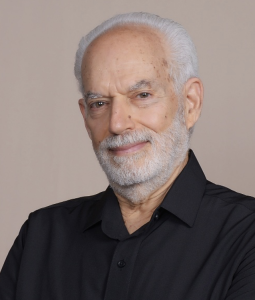 Rick Solomon, CPA, has spent more than 30 years helping professionals understand the human side of client relationships. He has taught and coached tens of thousands of professionals in seven countries, helping them build deeper, more productive relationships by better understanding the people they serve. His work with the estate planning profession began more than 25 years ago as a faculty member of the Esperti-Peterson Institute and the National Network of Estate Planning Attorneys, where he worked with leading estate planning attorneys on the human dimensions of the planning process. His work today includes developing practical approaches and resources that help professionals bring greater understanding and human presence to their client relationships, particularly when clients face consequential decisions. That kind of relationship can help clients feel understood and more able to move forward, while making the professional’s work more effective and rewarding.